Saved Asset Searches
In > > , you can view and edit asset searches.
The asset search functionality is also available in the Asset Information section when creating a deployment for a published package or creating a test deployment for an unpublished package. You can expand the Asset Information section to access the asset search functionality.
The asset search functionality is comprised of the following panes:
• A filters pane on the top left. On this pane, you can filter the assets by asset type, keyword, and advanced search criteria. You can name and save your filters as a saved asset search. For more information, see Creating a Saved Asset
Search.
• The Saved Asset Searches pane on the bottom left. All saved asset searches are displayed in the table. The All My Assets search is present by default. You can enter text in the filter field to narrow the list of displayed searches. Select a saved asset search to display the results of that search in the search results pane. You can also select a saved asset search and click  to delete the search.
to delete the search.• The search results pane on the right side. By default, all assets are shown in this pane until you either apply filters or select a search from the Saved Asset Searches pane. You can enter text in the filter field to narrow the search results. In some situations, you can select rows in the search results table to add those assets to the target assets for a deployment. For more information, see Selecting
a Saved Asset Search (from 9.7.1 onwards) and Selecting a Saved Asset Search (through 9.7.0).
Creating a Saved Asset Search
To create a saved asset search, perform the following steps:
1. Use the following filters to filter the assets in the search results pane:
◦ Asset Type—Click  to select the asset type. A window appears, showing a list of Thing Template assets.
to select the asset type. A window appears, showing a list of Thing Template assets.◦ Keyword—Enter a keyword and click outside of the field to view the keyword search result.
 |
The Keyword field is used to search assets or Thing-related properties, such as Asset name and ThingTemplate.
|
◦ Advanced Search Criteria—Add one or more filters to refine the search results.
a. Click Add Filter.
b. Select a filter from the Filter by list.
c. Select a condition from the Condition list.
d. Enter a value for the condition in the Value field.
e. Click Apply.
f. Repeat these steps to add another filter if needed.
If you add multiple filters, select whether they are joined by AND or OR.
The assets listed in the search results pane on the right update according to the specified filters.
2. Enter a unique name for the query in the Query Name field and click  to save the search.
to save the search.|
|
• If you enter an existing query name and attempt to save the search, a warning message appears and the search is not saved.
• If you select a saved search from the list, change any of the filters, and click
, the selected saved search is updated.• Starting with 9.7.1, when the default All My Assets search is selected,
is disabled. |
3. The new saved asset search displays in the Saved Asset Search list.
Selecting a Saved Asset Search (from 9.7.1 onwards)
To select a saved asset search, perform the following steps:
1. Select a search from the Saved Asset Searches list. The All My Assets search is the default selection.
| | • If you are creating a perpetual deployment, you must select a saved asset search. • If you are creating a one-time deployment, you can select a saved asset search or select individual assets by filtering and selecting assets from the search results pane. |
2. In the search results pane on the right, you can view and filter the assets from the results of the saved asset search.
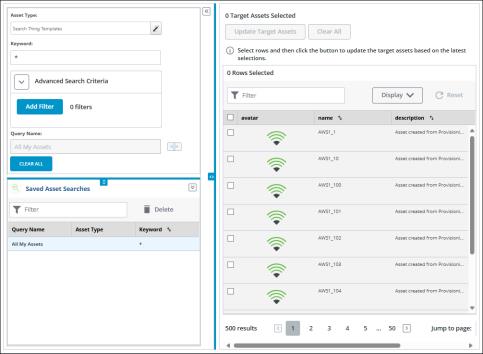
◦ If you are creating a perpetual deployment, all assets in the selected saved asset search are included in the target assets for the perpetual deployment. You cannot select individual assets from the search results.
◦ If you are creating a one-time deployment, you can select individual assets from the search results to include in the target assets for the deployment. If you do not select any individual assets, then all assets in the selected saved asset search are added to the target assets for the deployment.
To select individual assets from the search results, complete the following steps:
a. Select one or more rows in the search results or select the checkbox at the top of the list to select all assets on that page.
b. Click Update Target Assets to add the asset selections to the target assets. The number of target assets is shown at the top of the pane, for example 7 Target Assets Selected.
c. If there are multiple pages in the search results, update your asset selections page by page. If you make selections on one page and move to another page without clicking Update Target Assets, the selections on the previous page will be lost. The number of target assets shown at the top of the pane is cumulative across all pages.
d. If you change your selections on a page and click Update Target Assets again, the target assets from that page are updated based on the current asset selections. This allows you to remove an asset that you had previously added to the target assets.
e. If needed, you can select a different saved asset search and repeat these steps to add assets from multiple saved asset searches.
f. Click Clear All to remove all assets from the target asset list.
3. When creating a deployment, collapse the Asset Information pane to update the information that is displayed:
◦ The Total Target Assets field updates to show the total number of target assets for the deployment. These are the assets to which the deployment will be applied.
◦ The Saved Asset Search field displays the name of the selected saved asset search for a perpetual deployment or for a one-time deployment for which no individual assets were selected from the search results. For a perpetual deployment, the Total Target Assets value is the total number of assets in saved asset search. If you have selected individual assets from the search results for a one-time deployment, the Saved Asset Search field is not displayed.
| | For a perpetual deployment, the system regularly scans for assets that match the criteria defined for the selected saved asset search. New assets found during a scan are automatically included in later deployments. |
Selecting a Saved Asset Search (through 9.7.0)
To select a saved asset search, perform the following steps:
1. Select a saved asset search from the Saved Asset Searches list. The All My Assets search is the default selection.
◦ If you are creating a perpetual deployment, you must select a saved asset search.
◦ If you are creating a one-time deployment, you can select a saved asset search or select individual assets by filtering and selecting assets from the search results pane.
2. In the search results pane on the right, you can select individual assets from the asset list. If you do not select any assets, all assets in the saved asset search are automatically selected.
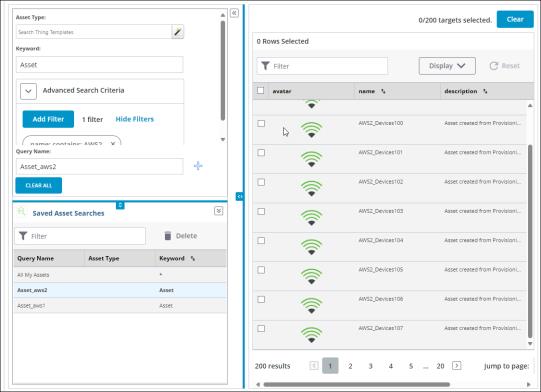
3. If you are creating a deployment, collapse the Asset Information pane. The total assets selected and corresponding saved criteria are displayed. If there are many assets, the Total Target Assets count may take some time to update.

For a one-time deployment for which you have selected individual assets within a saved search, the deployment occurs only for the selected assets. If you did not select individual assets, the deployment occurs for all assets within the saved search.
For a perpetual deployment, the selected assets are immediately added to the deployment. The system regularly scans for assets that match the defined criteria. New assets found during a scan are automatically included in later deployments.