Key Areas of Replication History
Replication history captures three main types of events:
Replication Process Events
Actions such as creation, updates, and deletions during replication are recorded to ensure synchronization between source and target systems.
For example:
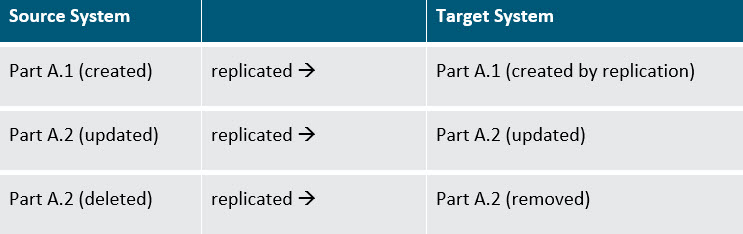
• Part A.1 created in the source system, is replicated in the target system.
• Part A.2 updated in the source system, changes are mirrored in the target system.
• Part A.2 is deleted from the source system, is removed from the target system.
Conversion of Local Data to Replicated Data
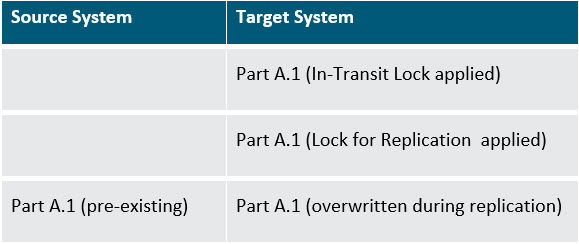
When converting local data to replicated data, two locks are applied and recorded:
• In Transit Lock
• Lock for Replication
For example:
Part A.1 exists in both source and target systems. To replicate:
• Apply In Transit Lock to Part A.1 in the target.
• Apply Lock for Replication, making it eligible for replication.
Conversion of Replicated Data to Local Data
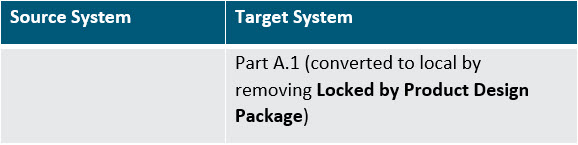
To convert replicated data back to local, the Locked by Product Design Package is removed. This event is also recorded.
For example:
Part A.1 exists in the target as replicated data. To make it local:
• Remove Locked by Product Design Package