Definitions
Electric Field ( )— The electric field is a vector field that represents the force per unit charge exerted on a test charge placed at a given point in space. The unit for the electric field is volts per meter
  . Mathematically, it is expressed as:
  where,
)— The electric field is a vector field that represents the force per unit charge exerted on a test charge placed at a given point in space. The unit for the electric field is volts per meter . Mathematically, it is expressed as: where,•  — Electric potential (Volt)
— Electric potential (Volt)•  — Magnetic vector potential (Tesla·meter)
— Magnetic vector potential (Tesla·meter)•  — Gradient operator
— Gradient operator•  — Time derivative
— Time derivativeIn the absence of magnetism, the  term can be neglected.
term can be neglected.Magnitude of Electric Field ( )— The magnitude of the electric field () at a point is expressed as:
 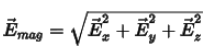 where,
 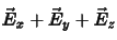 are the components of the electric field vector in the {
 } directions respectively.
)— The magnitude of the electric field () at a point is expressed as: where, are the components of the electric field vector in the {} directions respectively.Electric Field Direction— The electric field direction at a point is tangent to the field line at that point and points in the direction of decreasing electric potential.
Electric Potential
Electric Potential ()— The electric potential at a point in space is a scalar quantity that represents the amount of work required to move a unit positive charge from a reference point (typically infinity) to that point without producing any acceleration. The unit for electric potential is volts ( ). Mathematically, it is expressed as:
 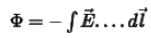 where,
)— The electric potential at a point in space is a scalar quantity that represents the amount of work required to move a unit positive charge from a reference point (typically infinity) to that point without producing any acceleration. The unit for electric potential is volts (). Mathematically, it is expressed as: where,•  — Electric field vector
— Electric field vector •  — Infinitesimal displacement vector along the path of integration
— Infinitesimal displacement vector along the path of integrationMagnitude of Electric Potential  — The magnitude of the electric potential at a point is the absolute value of () and is determined by the configuration of charges and the reference point.
— The magnitude of the electric potential at a point is the absolute value of () and is determined by the configuration of charges and the reference point.Electric Potential Difference  — The difference in electric potential between two points is given by:
— The difference in electric potential between two points is given by: Derived Quantities
Potential Energy ( — The potential energy of a charge (
 ) in an electric potential () is:
— The potential energy of a charge () in an electric potential () is: Equipotential Surfaces ()— Surfaces on which the electric potential is constant ( = constant). These surfaces are always perpendicular to the electric field lines.
)— Surfaces on which the electric potential is constant ( = constant). These surfaces are always perpendicular to the electric field lines.Electric Charge
Electric Charge ()— Electric charge is a fundamental property of matter that determines how a particle or object interacts with electric fields. It can be either positive or negative and serves as the source of electrical forces. Electric charge is a scalar quantity, measured in coulombs ( ), and governs the behaviorr of charged particles in electromagnetic interactions.
)— Electric charge is a fundamental property of matter that determines how a particle or object interacts with electric fields. It can be either positive or negative and serves as the source of electrical forces. Electric charge is a scalar quantity, measured in coulombs (), and governs the behaviorr of charged particles in electromagnetic interactions.Mathematically, the net charge on an object is expressed as: 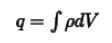 where,
where,•  — Charge density
— Charge density •  — Infinitesimal volume element
— Infinitesimal volume element Properties of Electric Charge
• Quantization— Electric charge exists in discrete units of  , the elementary charge
, the elementary charge • Conservation— The total electric charge in an isolated system remains constant over time, meaning charge can neither be created nor destroyed, only transferred.
• Polarity— Electric charge can be either positive or negative, determining the direction of electrostatic interactions—like charges repel, while opposite charges attract.
Types of Electric Charge
• Point Charge— An idealized charge concentrated at a single point in space.
• Distributed Charge— Charge spread over a region rather than a single point. It can be classified as,
◦ Volume charge density ()— Volume charge density is the amount of charge per unit volume of a body. Volume charge density is measured in coulombs per meter () and is given as: 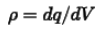
)— Volume charge density is the amount of charge per unit volume of a body. Volume charge density is measured in coulombs per meter () and is given as: ◦ Surface charge density ( )— Surface charge density is the amount of charge per unit area on a two-dimensional surface. Surface charge density is measured in coulombs per meter () and is given as: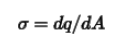
)— Surface charge density is the amount of charge per unit area on a two-dimensional surface. Surface charge density is measured in coulombs per meter () and is given as: ◦ Line charge density ( )— Line charge density is the amount of charge per unit length of line charge distribution. Line charge density is measured in coulombs per meter () and is given as: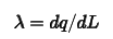
)— Line charge density is the amount of charge per unit length of line charge distribution. Line charge density is measured in coulombs per meter () and is given as: Derived Quantities
Total Charge ( )— The total charge in each region is calculated as: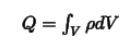
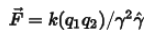
)— The total charge in each region is calculated as: Electrostatic Force ( )— The electrostatic force between two-point charges
  separated by a distance (
 ) is calculated using Coulomb’s law given by:
  where,
)— The electrostatic force between two-point charges separated by a distance () is calculated using Coulomb’s law given by: where,• — Electrostatic force ( )
)
— Electrostatic force ()•  — Coulomb’s constant (
 )
)
— Coulomb’s constant ()• — Magnitudes of the two-point charges ()
— Magnitudes of the two-point charges ()• — Distance between the charges ( )
)
— Distance between the charges ()•  — Unit vector along the line joining the charges
— Unit vector along the line joining the chargesElectric Current
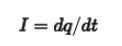
Electric Current ( )— Electric current is the rate of flow of electric charge through a conductor or space. It is a scalar quantity, measured in amperes (
 ). Mathematically, it is expressed as—
  where,
)— Electric current is the rate of flow of electric charge through a conductor or space. It is a scalar quantity, measured in amperes (). Mathematically, it is expressed as— where,• — Electric charge ()
— Electric charge ()•  — Time (
 )
)
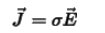
— Time ()Current Density ( )— The electric current per unit area of cross-section is referred to as the current density. It is a vector quantity, measured in amperes per square meter (
 ). Mathematically, it is expressed as—
  or
or 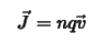 where,
)— The electric current per unit area of cross-section is referred to as the current density. It is a vector quantity, measured in amperes per square meter (). Mathematically, it is expressed as— or where,• — Electrical conductivity ( )
)
— Electrical conductivity ()• — Electric field vector ( )
)
— Electric field vector ()•  — Number density of charge carriers (
 )
)
— Number density of charge carriers ()• — Charge of a single carrier ()
— Charge of a single carrier ()•  — Drift velocity of charge carriers (
 )
)
— Drift velocity of charge carriers ()Ohm’s Law (Microscopic Form) (): Ohm’s Law at the microscopic level describes the relationship between current density and the electric field: where,
): Ohm’s Law at the microscopic level describes the relationship between current density and the electric field: where,• Electrical conductivity ()
)• Current density ( )
)
)• Electric field vector ()
)This equation expresses how an electric field influences the movement of charge carriers in a material.
Derived Quantities
Total Current ()— The total current passing through a surface () is calculated as—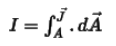 where,
)— The total current passing through a surface () is calculated as— where,•  — Current density ()
— Current density ()•  — Infinitesimal area vector perpendicular to the surface
— Infinitesimal area vector perpendicular to the surfaceResistance ( )— The resistance of a conductor depends on its material properties and geometry. It is given by—
  where,
)— The resistance of a conductor depends on its material properties and geometry. It is given by— where,• — Resistivity ( )
)
— Resistivity ()• — Resistivity of the material ( )
)
— Resistivity of the material ()•  — Length of the conductor ()
— Length of the conductor ()• — Cross-sectional area ( )
)
— Cross-sectional area ()Conductor
Conductor— A conductor is a material that allows electric charge to flow easily. This is mainly because it contains loosely bound or free-moving electrons that facilitate the transfer of electrical energy. Conductors have high electrical conductivity and low resistivity, making them efficient for carrying electric current. Common examples include metals such as copper, aluminium, and silver.
Electrical Conductivity— The electrical conductivity of a conductor quantifies its ability to allow the flow of electric current. It is a scalar quantity, measured in siemens per meter (). Mathematically, electrical conductivity is the reciprocal of resistivity ()—  where,
). Mathematically, electrical conductivity is the reciprocal of resistivity ()— where,• — Resistivity of the material ()
— Resistivity of the material ()A higher conductivity value indicates that the material offers less resistance to current flow, making it a good conductor. Conversely, materials with low electrical conductivity are poor conductors or insulators.
Properties of Conductors
Charge Distribution— Charges on a conductor reside on its surface in electrostatic equilibrium.
Electric Field— The electric field inside a perfect conductor is zero in electrostatic equilibrium.
Surface Normal Field— The electric field near the surface of a conductor is perpendicular to the surface.
Dielectric
Dielectric— A dielectric is a material that does not conduct electricity but can become polarized when exposed to an electric field. This polarization allows the material to store electrical energy. Dielectrics are known for their low electrical conductivity and high permittivity, which makes them useful in capacitors and insulating applications. Common dielectric materials include glass, ceramics, and plastics.
Permittivity ( )— Permittivity is a measure of how well a dielectric material can store electrical energy in an electric field. It determines the material’s ability to permit electric field lines to pass through it. The unit of permittivity is farads per meter (
 ). The permittivity of a material is given by—
  where,
)— Permittivity is a measure of how well a dielectric material can store electrical energy in an electric field. It determines the material’s ability to permit electric field lines to pass through it. The unit of permittivity is farads per meter (). The permittivity of a material is given by— where,• — Absolute permittivity of the material
— Absolute permittivity of the material•  — Permittivity of free space (
 )
)
— Permittivity of free space ()•  — Relative permittivity ()
— Relative permittivity ()